Mathematical Miscellany #90

A mathematics resources compilation:


Dan Shuster has been curating a collection of low floor high ceiling math tasks that he is calling “180 Days of Math Tasks”, which can be found here. The original source can be found at the bottom of each slide.


I do like this new PhET simulation – Center and Variability covering these topics:

Topics

  • Median
  • Mean
  • Central Tendency
  • Boxplot
  • Variability
  • MAD
  • Range

For more on PhET Sims – see this page.


1st Class Maths is frequently mentioned on this blog; the home page points us to many recent updates, including past paper topic analyses for Edexcel and AQA. Reading the notes at the foot of the table, we see that the Past Series Appearance Percentage analysis is for exams up to and including June 23.

1st Class Maths – Edexcel Past Paper Topic Analysis
1st Class Maths – AQA Past Paper Topic Analysis

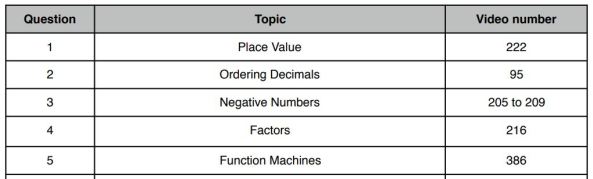
Remember that 1st Class Maths also has a YouTube Channel where you will find all the video explanations, and we see from the updates that a video and exam questions for upper and lower bounds have recently been added for Edexcel and AQA; these resources can all be accessed from the topic lists illustrated here.


I have seen several lovely new GeoGebra resources recently, including Dividing Whole Numbers by Fractions Word Problems.

GeoGebra – Dividing Whole Numbers by Fractions Word Problems

You can check further GeoGebra Mathematics resources on their new webpage.

GeoGebra Math Resources
Edexcel GeoGebra Resources

On my GeoGebra page you can find many additional GeoGebra resources, including resources for GCSE and A Level Maths and Further Maths.


The wonderful Open Middle resources are regularly updated; scroll down to the footer to see the most recent additions, including Linear and Quadratic system illustrated here which reminds me of another problem I like; I was distracted one morning by this problem on creating a system of two linear equations.

Open Middle

November Examinations 2023

MathsBot GCSE countdown
1st Class Maths Key topics paper 3F Edexcel

Key topics for Paper 3F, Edexcel, also available: Key topics for Paper 3H, Edexcel.

From the brilliant First Class Maths, see these student-friendly key topics lists for Edexcel Paper 2 Key Topics and AQA Paper 2 Foundation Key Topics. Also available: AQA Higher

For many further revision resources – see the post, November Examinations November 2023.

Corbett Maths – Revision Resources
Corbett Maths – A Bit of Everything practice papers

On Corbett Maths, try the Ultimate GCSE Revision Videos; use the GCSE Revision resources available for Edexcel, OCR, AQA, and CCEA, you will also find Revision checklists, a collection of Practice Papers, and A Bit of Everything Papers; the papers with questions provide very comprehensive syllabus coverage! Each paper includes a contents list with the relevant teaching video.

CorbettMaths revision checklist
MathsBot GCSE countdown

On 1st Class Maths, the Edexcel Revision page offers questions and solutions by topic and difficulty, note the final column in the table which shows the Edexcel past series percentage correct up to and including the June 2023 exams. The Ultimate Revision Booklets for Foundation (114 questions) and Higher (106 questions) have one question on every topic and accompanying video solutions. With similar resources, there is also an AQA Revision page.

1st Class Maths Ultimate Revision Booklet

November – Barvember

White Rose Maths – Barvember

It’s Barvember from White Rose Maths. Barvember, from White Rose Maths, was created to encourage the use of the bar model. Bar models can really help children visualise and then solve maths problems. You could solve the problems using this great digital tool from White Rose Maths, Bar Model


Further resources on Bar Modelling:

For an Introduction to Bar Modelling have a look at the NCETM Secondary Professional Development Materials  Choose the section on Using mathematical representations at KS3 for 10 different guidance documents including Bar Models. This 17-page document for professional development provides a very comprehensive introduction to Bar Modelling and includes example problems.


On the subject of White Rose Maths have a look at this brilliant resource from Ben Gordon: Representations through the Curriculum shows the progression of bar modelling from Year 7 to Year 11 with examples for each topic and some video support.


Thinking Blocks – Math Playground

The section on Further Resources in the NCETM guidance document includes Thinking Blocks, an outstanding resource that I included in a post on Ratio and Proportion. The relevant information on using the resource is included for completeness in this post. Further resources for Bar Modelling are also given.


Thinking Blocks from Colleen King’s site Math PlayGround – is a wonderful way to visualize Ratio and Proportion problems. This works on all devices.

Models like this really help students to visualise problems. Note the numerous videos showing how to model problems (scroll down the page). You can use the Thinking Blocks Tool to model your own problems; watching the videos will help you learn to use the tool. There is a very clear help section also.

Thinking Blocks Modeling Tool

I have used the tool here to model a problem from Andy Lutwyche’s Clumsy Clive on Ratio resource.

Thinking Blocks Modeling Tool – use for your own problems

Also featured in NCETM’s resource section is The Mathenæum from Ken Wessen which includes Modelling Word Problems and Fractions, Decimals and Percentages.

The Mathenæum – Ken Wessen

See also:

Sybilla Beckmann paper

Sybilla Beckmann’s paper, Solving Algebra and Other Story Problems with Simple Diagrams: a Method Demonstrated in Grade 4–6 Texts Used in Singapore is an interesting read on the subject of the use of diagrams.


Note Pearson Edexcel GCSE Maths Networks on YouTube; for an excellent introduction to Bar Modelling watch Naomi Bartholomew-Millar’s session.

MathPad – Using Bar Pictures to Solve Equations

.


Wayne Chadburn

The start of November is a good time to remind readers of Wayne Chadburn’s monthly calendars. He writes these calendars to provide regular, varied practice – a little bit of maths each day. Three versions of each monthly calendar are available, Higher, Foundation Plus, and Foundation; answers are provided.