Reading the Microsoft blog on this integration, I noted Coggle.itwith which one can create mind maps; the free model allows 3 Private Diagrams and Unlimited Public Diagrams with PDF & Image Download. This looks like a simple way to produce such diagrams and I lke the fact that they can be integrated with OneNote.
MEI – Ritangle.
Registration for MEI’s Ritangle opens on October 7th. Ritangle is a competition for teams of students of A level Mathematics, the International Baccalaureate and Scottish Highers requiring no knowledge of mathematics beyond A level Mathematics. Students can use Technology to help with some of the questions.
This competition has been added to the updated Competitions page. This page includes Puzzle of the Week, a free international puzzle competition for schools.
In a post on Cognitive Science in the Classroom, I mentioned Knowledge Organisers, or to be more precise I mentioned Kris Boulton’s “Why Maths Teachers Don’t Like Knowledge Organisers,” Kris has written on why they are less applicable to maths. Certainly, I had not used knowledge organisers for Mathematics myself with one exception, I have used William Emeny’s Angle Facts; as Kris Boulton says in his article, “Maths is super-dense with concepts, and processes, but really only very few facts.” Noting topics where students do need to know more facts, he includes angle facts.
When I have used Will’s angle facts, I have adapted it so some content is missing, particularly the section on basic angle facts, students can be given just the diagrams for example and asked to recall the basic angle facts. I have also asked students to recall as many basic angle facts before they see the list as in the organiser, so using it following retrieval practice or as a retrieval exercise.
As noted in this post on Knowledge Organisers from Durrington Research School, it is not about the knowledge organisers themselves but how they are used for planning, teaching and testing. Note the example shared of a Maths Knowledge Organiser, Year 10 Expressions, Foundation. I like the fact that key vocabulary is included here, the few key facts needed and of course by far the largest section – key concepts with examples.
To quote the Durrington blog, “Maths are using their range of knowledge organisers to support homework tasks. Firstly, the students can access their maths knowledge organisers are any time using our online system Connect. This means that students have scaffolding in place for when they are working outside of the classroom. Furthermore, every fortnight the maths team set a homework that is based on retrieval quizzing. The students are required to use the knowledge organisers to find the answers to upcoming quizzes and then actually sit the quiz in class on the due date for the homework. Students who score less than 12 out of 15 are then supported in making flashcards on the questions, again gaining the information from the knowledge organiser, and use these to retest until they are successful. This strategy demonstrates how knowledge organisers can be used to support learning through the testing effect.
Nicola Whiston has a superb collection of Knowledge Organisers which follow the White Rose Schemes of Learning, all are available on TES Resources, on TES editable versions are available as well as the free pdf resources. These are really attractive and I believe appeal to students. I think these are excellent to use in class alongside teaching a topic. They could also be used for retrieval practice.
You can hear Nicola talking about Knowledge Organisers with Tom Manners, In his interview, he was joined by Nathan Burns aka @MrMetacognition who has researched these in great detail, as well as Nicola Whiston (@Whisto_Maths) to discuss what maths knowledge organisers should contain and how we should use them effectively.
GCSE
Indices GCSE Knowledge Organiser extract – Becky Reed
From Becky Reed a set of Knowledge Organisers for Edexcel GCSE (UK age 14-16). We have here another set of very clear and also attractive set of resources. Like the other resources here I think these are useful in class and for students to use at home also. There are several examples given which is really helpful.
Sarah Hall has a GCSE (‘WJEC flavoured’ )collection. Sarah’s Knowledge Organiser resources can all be found (all free) on TES Resources. These have many clear illustrations and like others in the Knowledge Organiser collection, are very attractively presented.
For a collection of Cornell notes linked to topics found in the Maths curriculum see Mr Hawes Maths.
Use the Notes section on the left-hand menu.
NonExamples.com – Jonathan Hall
If I want definitions, characteristics and examples (clarified with the use of non-examples), then I could return to the Frayer model. (See Frayer Models.)
Searching for Mathematics Knowledge Organisers, I have come across some resources I wish to explore further, such as the Henry Box School on Knowledge Organisers where the school are sharing Knowledge Organisers for each subject, recognising the support parents can offer. From the Subjects menu, choose a subject and you will find this includes Knowledge organisers for Year 7 through to Year 11, see Maths for example (scroll down the page for the organisers.
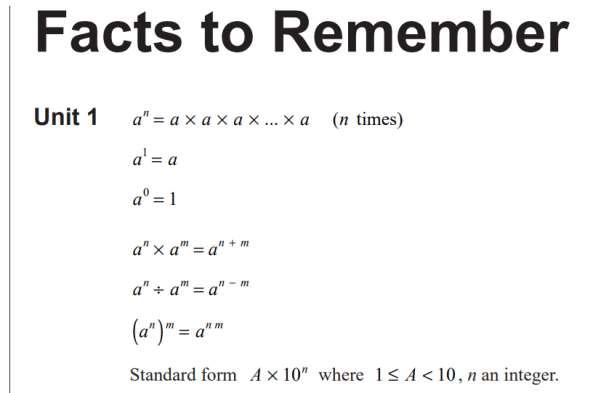
CIMT GCSE – Facts to Remember
CIMT’s GCSE course includes Facts to Remember for each unit, see “Other sections” for the Practice Books.
A Level Mathematics
Mrs D Maths – Knowledge Organisers
Mrs D Maths is writing Knowledge Organisers for A Level Maths, ( free on TES Resources). She has completed a set of Year 2 Pure Mathematics. These organisers follow the Edexcel specification and are aligned to the Pearson Edexcel textbooks, but with common content for A Level Maths, these resources are very useful whichever A Level exam board you use. The complete set of Pure Year 2 resources has 12 Knowledge Organisers:
For A complete set of A Level Statistics and Mechanics Knowledge Organisers – see these resources from Lucyjc. These resources are available free on TES Resources: Statistics and Mechanics. All include Key Words and Definitions and What Do I Need to Know sections.
It is worth noting in this collection all the excellent Notes and Examples available for A Level Mathematics, see for example these excellent summary A level notes for students from Mathsbox
A nice little starter from Transum, Small Satisfaction. I do like the related activities, I know some of my students will do this first level quickly, the secondand third levels will provide them with something to think about, or perhaps the alternative, Satisfaction.
Remember that Transum provides starters for students all the way through to Avanced level.
A divisibility test for 7…
Staying with Transum, Divisibility Tests 2-12 provides a handy summary of divisibility tests. What really caught my eye here is the divisibility test for 7. Scroll down the page for the comment from Transum which tells the story of the origins of the test – a 12-year-old student. And note the proof – something for our A Level students perhaps!
Note the exercises to practise using the divisibility tests. Delightfully Divisible will keep everybody busy! See also, from Plus magazine – Finding the nine. (There is a link to a very clear solution in the video).
Mathisfun
Mathisfun is an attractively presented site, the divisibility rules are clearly explained and if you scroll to the end of the page you will see multiple-choice questions to try.
The page on the divisibility tests for 7 is a reminder of the site – Mudd Maths Fun Facts. This searchable collection of Mathematics fun facts from Harvey Mudd College Math Department make ideal lesson starters or perhaps useful for those odd moments. Note the search on the left, it is possible to search by topic, difficulty level and keywords.
A blast from the past for many teachers perhaps, from MathsFrame, the ITPs have been made available for modern browsers – no Flash needed. Developed in 2002 to help with the teaching of maths in UK Primary Schools, the National Numeracy Strategy Interactive Teaching Programs cover many areas of numeracy including number, shape, measure and statistics.
The Learning Scientists have a very comprehensive collection of podcasts, many of these are bite-size, short but really clear – ideal for busy people!
For many examples of Mathematics resources we can use in the classroom and reading, see my page on Retrieval Practice and other learning strategies.
Retrieval Practice.org – Library
For, I think one of the most comprehensive and well-organised reading lists I have come across see The go-bag on the CogSciSci blog. Blogs, articles and research have been included with a real focus on the application of cognitive science to the classroom. the list is in 23 sections with a clear summary of each item.
The CogSciSci blog concerns cognitive science in the science classroom, but this reading list is relevant for teachers of any subject. Note also the study modules available for teachers, including Retrieval Practice. In section 7 of the Retrieval Practice module, I was interested to see the Retrieval Roulettes and like the KS4 Chemistry triple new Excel resource linked to in the third paragraph. Questions and answers on the first sheet can be for any subject, this particular resource has all of GCSE chemistry (AQA) but you could just copy and paste questions and answers. For Mathematics, we do have Jonathan Hall’s Retrieval Facts on MathsBot or his Recap and Recall; to choose questions by topic, use his GCSE Revision Grid. Other resources can be found on my Retrieval Practice page, including this Custom Starter from Transum which allows teachers to select the number of questions and the topics to include; scroll down the page and choose the topics you want from the Concept Selection.
It is possible to save a particular selection of topics as the URL for your selection will be generated. It is also possible to drag the panels so your questions are displayed in the desired order. The beginning of a lesson can be an ideal time to review previous learning, starters like this can be ideal.
To return to the reading list, I was particularly interested to read Kris Boulton’s “Why Maths Teachers Don’t Like Knowledge Organisers,”. Kris has written on why they are less applicable to maths. The one knowledge organiser I have used myself is William Emeny’s one on Angle Facts. In Mathematics, rather than knowledge organisers, we can turn to Frayer Models.
For a complete collection of Knowledge Organisers for Mathematics see this post: Knowledge Organisers for Mathematics which includes resources for KS3, GCSE and A Level.
I am looking at Order of Operations with my Year 7 students currently and noted N5 from the Standards Unit in the STEM Order of Operations collection; I do like the area representations for the numerical expressions here.
Standards Unit – N5
The collection for Order of Operations includes the CIMT resources on the topic, I have used CIMT resources throughout my teaching career. Remember CIMT has much more than just the text chapters; as the STEM Centre commentary points out we also have for example the additional activities. Having used Transum’s Broken calculator starter successfully last week, I agree with the STEM Centre highlighting CIMT’s Calculator Keys Activity ( 4.4), an excellent task with extension questions included.
Transum Mathematics
Magic Fractions is a good recommendation, I like the way this problem involves listing ordered pairs from a set of three numbers – a handy reminder of Systematic Listing Strategies.
Looking at an Algebra topic list I checked Transformation of Graphs, I like that recording sheet for students to use; they can explore functions and transformations using graphing software and sketch the graphs on the grid provided. Note the link to some other resources to extend GCSE students and a reminder of the wonderful Durham Maths Mystery.
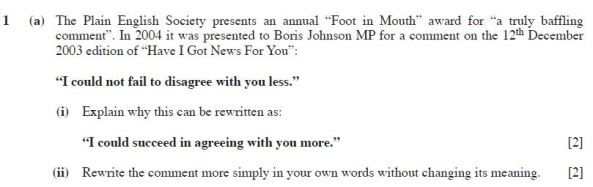
A final thought this week – with year 7, as well as looking at order of operations we have been studying Directed Numbers; our discussion reminded me of Boris Johnson’s 2004 statement, made during the BBC’s light-hearted news quiz show Have I Got News for You, “I could not fail to disagree with you less.” I left Year 7 to ponder that over the weekend! I recall hearing it on the radio whilst driving to school and correctly predicting it would turn up in a D2 logic question on an MEI A Level Further Maths paper!
 I have often mentioned the excellent PhET simulations; it is now possible to embed these in OneNote. Simply paste any public PhET link, such as that for Balancing Act (https://phet.colorado.edu/sims/html/balancing-act/latest/balancing-act_en.html) on to a OneNote page and it will render it as a live interactive embed.
 Noting the popularity of Long Division & Multiplication – Formal Methods I have checked and updated this page. This includes Algebraic long division.




 A nice little starter from Transum,